
Legacy of Alexander the Great in Turkey
Istanbul · Bursa · Çanakkale · Assos · Pergamon · Ephesus · Kuşadası · Miletus · Aphrodisias · Pamukkale
Send an enquiry
12 days / 11 nights
At a glance
Duration12 days / 11 nights
TransportFlight
GuideLocal guide
AccommodationHotels
Destinations
IstanbulCappadociaPamukkaleAntalyaAegean Coast
Day by day
Itinerary
-
Day 1 Zagreb – Istanbul
Flight to Istanbul. On arrival in Istanbul, transfer to the hotel and check-in. After a short rest, boat ride on the Bosphorus. Dinner at a restaurant serving national cuisine. Return to the hotel, overnight.
-
Day 2 Istanbul
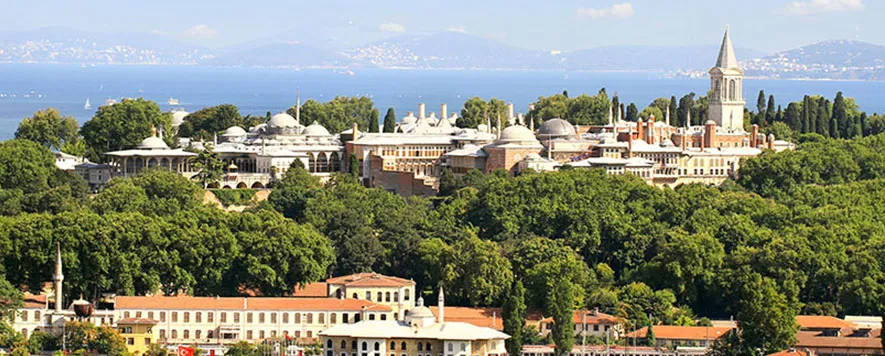
Breakfast. Sightseeing tour of the city with a local guide: the ROMAN HIPPODROME, once the centre of political activity in Roman times – the BLUE MOSQUE – HAGIA SOPHIA, built during the reign of Emperor Justinian in the 6th century; until the 15th century it was a Byzantine church, later a mosque, and today it is a museum, proposed by many historians as the eighth wonder of the world – the YEREBATAN CISTERN – TOPKAPI PALACE – the GRAND BAZAAR... Late lunch or early dinner. Return to the hotel, overnight.
-
Day 3 Istanbul – Bursa – Çanakkale
Breakfast. Departure from Istanbul. Drive to BURSA, the fourth-largest city in Turkey by population and the most industrially developed. It lies in a valley below Mount Uludağ, which the Romans called Olympus. Bursa is considered the birthplace of the Ottoman Empire, as confirmed by the protection of eight landmarks in the city and the nearby village of Cumalıkızık. Visit to the great ULU MOSQUE and KOZA HAN. Continue to the town of ÇANAKKALE. Check-in at the hotel, dinner, overnight.
-
Day 4 Çanakkale – Troy – Assos – Bergama
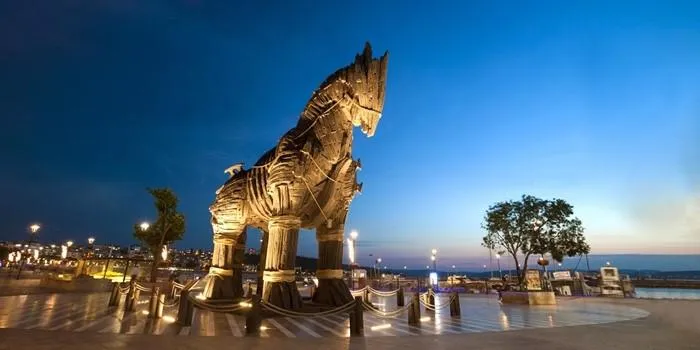
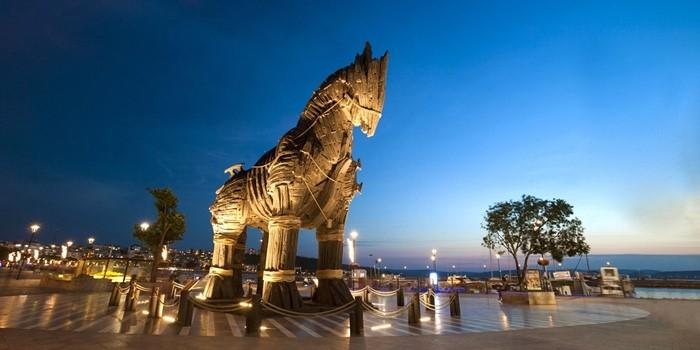
Breakfast. Departure from the hotel. Drive to the ancient city of TROY, known from Homer’s epics the Iliad and the Odyssey, which tell of the Trojan War. According to tradition, the city was founded by Tros, the grandson of Dardanus.
Drive to the small town of ASSOS, where Aristotle lived and opened his own Academy.
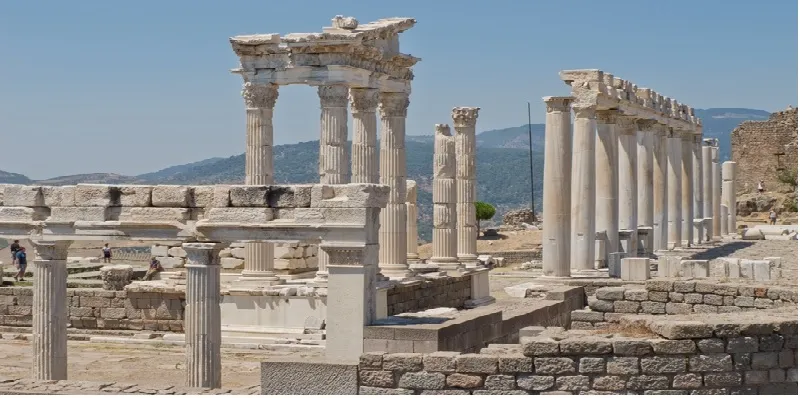
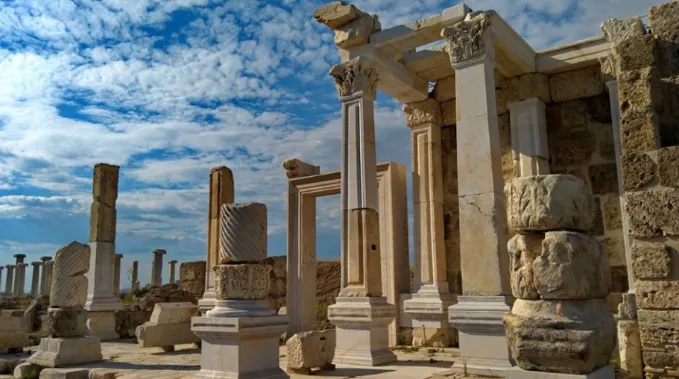
Continue to ancient PERGAMON (today’s BERGAMA), which in the Hellenistic period was the centre of the famous Kingdom of Pergamon. Tour of the site: the ASCLEPIEION, a famous sanctuary and healing centre, the COLONNADED STREET, the REMAINS OF THE ALTAR OF ZEUS, the TEMPLE OF TRAJAN, the THEATRE, the RED BASILICA. The city got its name from parchment, a writing material made by processing sheep or goat skin. Visit to the Archaeological Museum in Bergama, which holds exhibits from the time of ancient Rome.
Check-in at the hotel, dinner, overnight.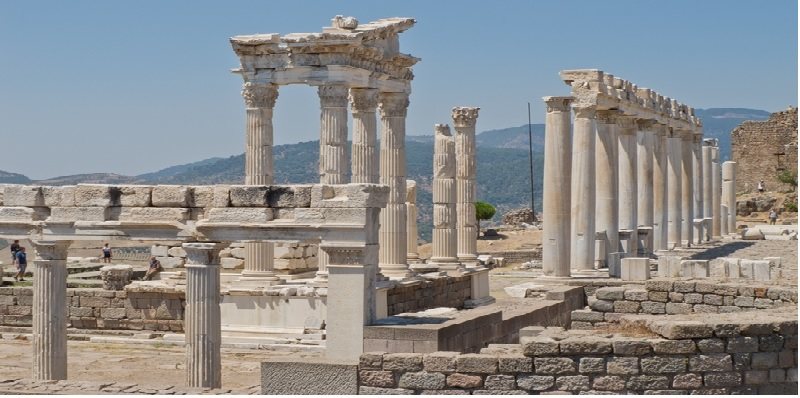
-
Day 5 Bergama – Izmir – Ephesus – Kuşadası
Breakfast. Drive to IZMIR, a Mediterranean city on the Aegean Sea. The Greek father of history, Herodotus, described it as a city under the most beautiful sky and with the best climate on Earth. Tour of the town: KONAK PIER, a modern island on the Izmir waterfront designed by Gustave Eiffel, ALSANCAK, the old part of the city with narrow lanes lined with old Greek houses, BARLAR SOKAĞI or the Street of Bars, the KORDON promenade, lined with Izmir’s most luxurious apartments, CUMHURIYET MEYDANI square, KÜLTÜRPARK, one of the larger parks, with numerous rows of palm trees, fountains, a lake, sculptures and an amusement park, the CITY HALL and the CLOCK TOWER, among the best-known symbols of Izmir...
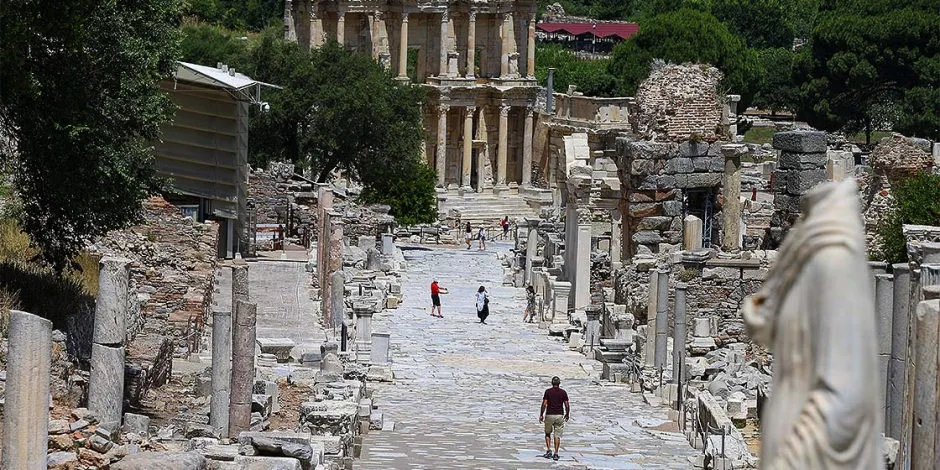
Continue to another ancient city, EPHESUS, an outstanding example of a Roman port city, with a sea channel and a lower harbour, for which it has been inscribed on the UNESCO list of World Heritage Sites in Asia. Excavations have revealed great monuments from the time of the Roman Empire, including the Library of Celsus, the Great Theatre and the remains of the famous Temple of Artemis, one of the Seven Wonders of the World, which attracted pilgrims from all over the Mediterranean. Near Ephesus we will visit the HOUSE OF THE VIRGIN MARY, which both Muslims and Christians consider to be the place where the Virgin Mary lived after the crucifixion of Christ.
Departure for KUŞADASI, one of the most popular resorts of modern Turkey, dinner, overnight.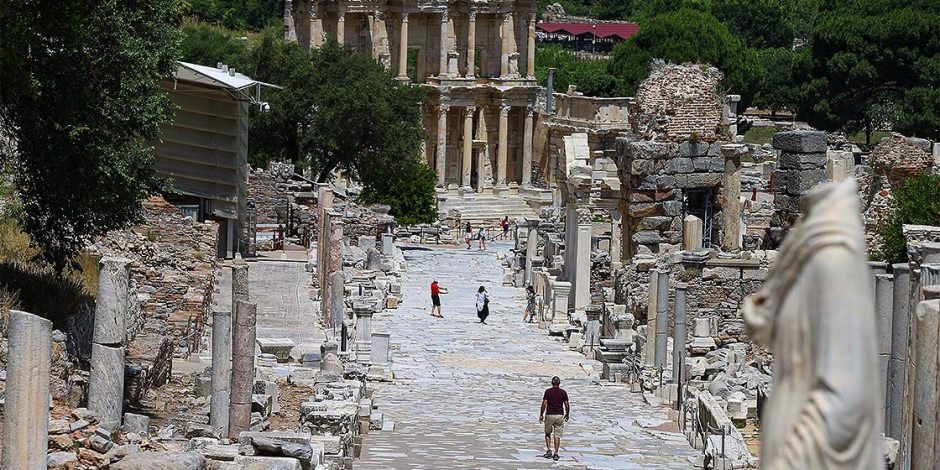
-
Day 6 Kuşadası – Priene – Miletus – Didyma
Breakfast. Departure for PRIENE, an ancient Greek city distinguished by its amphitheatre, temples, agora and more.
Afterwards, departure for ancient MILETUS, known as the birthplace of many philosophers, the most famous of whom is Thales.
Drive to DIDYMA, which went through various transformations in the course of its history, from an ancient Hellenistic sanctuary, through an important Roman port, to a small fishing village.
Return to the hotel, dinner, overnight.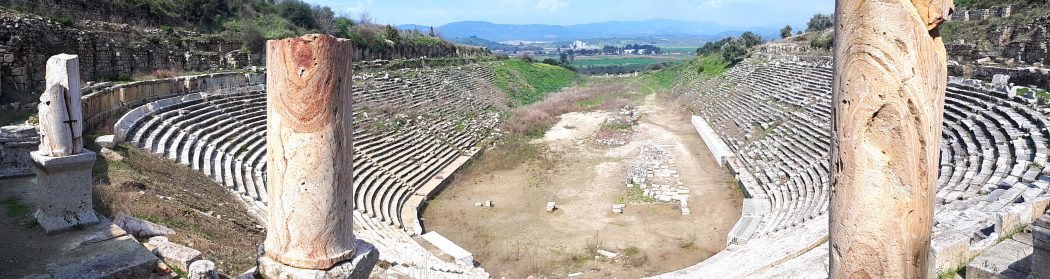
-
Day 7 Kuşadası – Aphrodisias – Hierapolis – Pamukkale
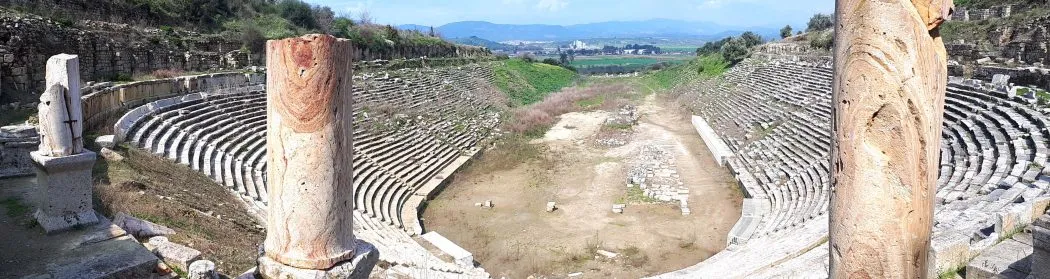
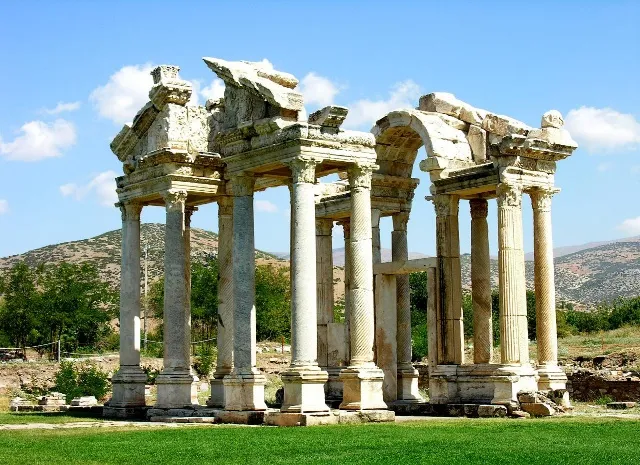
Breakfast. Departure for APHRODISIAS, an ancient city where the remains of the Temple of Aphrodite from the 1st century BC are still visible. During the reigns of the emperors Augustus and Hadrian, the temple was further enlarged and remodelled, and in the 5th century it was converted into a church. In the vicinity of Aphrodisias are the tetrapylon, the odeon and the bishop’s palace, the agora, the theatre, the stadium, the Baths of Hadrian and the Sebasteion, where the imperial cult was worshipped.
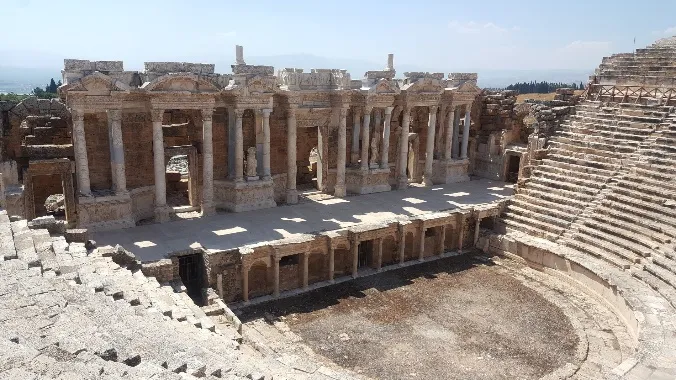
Afterwards, a tour of one of the best-known ancient sites in Turkey, HIERAPOLIS, with the remains of the church and the tomb of the Apostle Philip, the amphitheatre, the necropolis with sarcophagi…
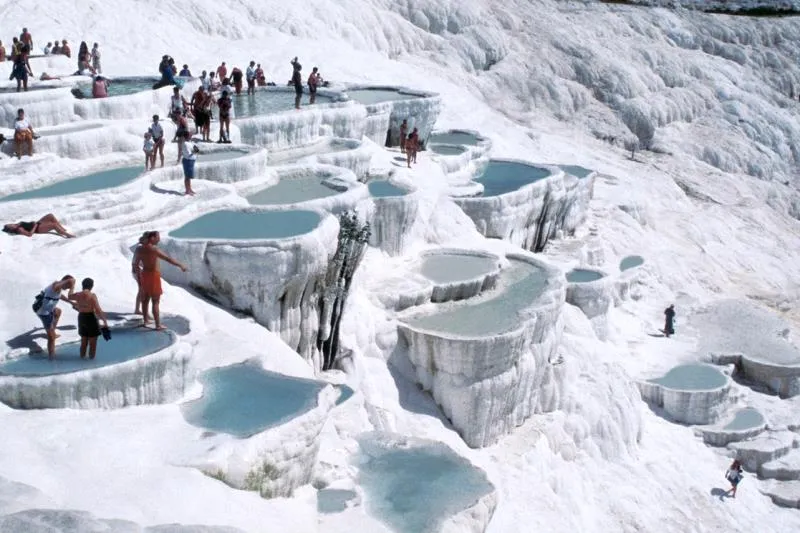
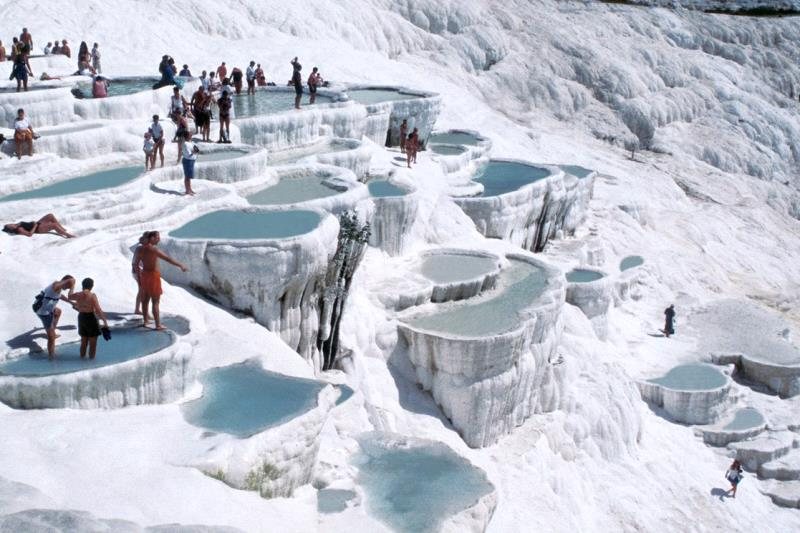
Drive to PAMUKKALE, a complex of unique mineral springs in south-western Turkey, near the city of Denizli. The site consists of hot springs and travertine limestone with an unusual form of shallow terraced pools, created by overflowing mineral water and the deposition of minerals. The white vertical walls are reflected in the water-filled pools, stalactites hang along the edge of the whole area like frozen waterfalls, and dark mountains covered with pine forest rise behind the terraces. The name Pamukkale means cotton castle. Some believe the name comes from the soft appearance of the cliffs and terraces, but a local legend says that in ancient times giants dried their cotton harvest on the terraces. Check-in at the hotel, dinner, overnight.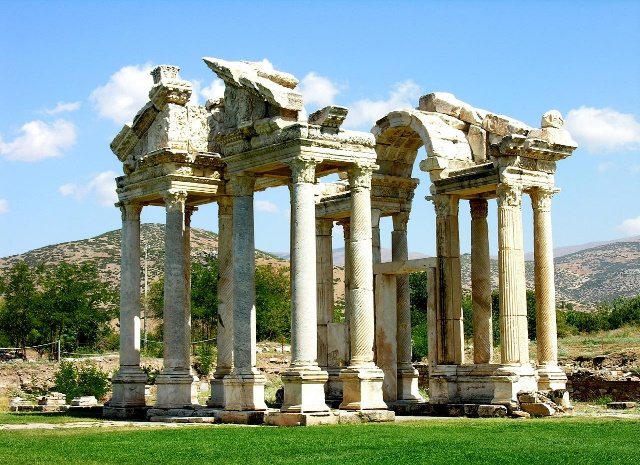
-
Day 8 Pamukkale – Antalya
Breakfast. Tour of Pamukkale itself and swimming, weather permitting.
Departure for ANTALYA, a city on the south-western Mediterranean coast of Turkey and one of the best-known Turkish resorts. Check-in at the hotel, dinner, overnight.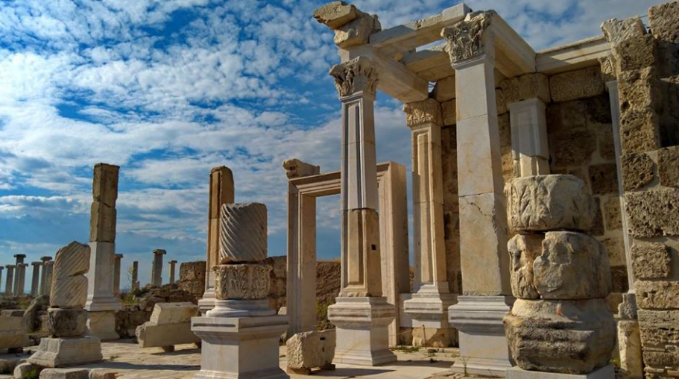
-
Day 9 Antalya – Side – Aspendos – Perge
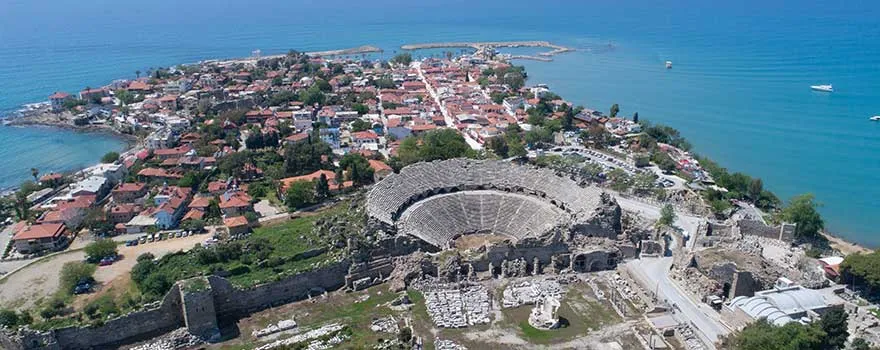
Breakfast. Departure for the ancient city of SIDE. Its very location enabled Side to develop into an important Mediterranean port in a relatively short time. The beginnings of the city are also linked to a legend which says that Greek settlers forgot their mother tongue soon after conquering the area. At that time, the region was inhabited by a people with a distinctive language and a particular dialect. The language was so sonorous and melodious that everyone who spent even a little time in the city soon adopted it as their own and forgot their mother tongue.
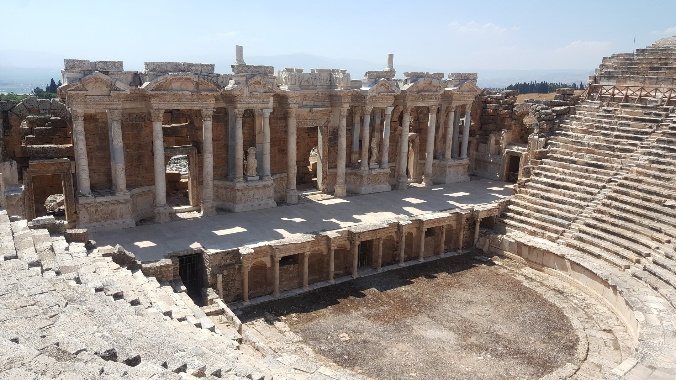
Departure for ASPENDOS, home to the best-preserved Roman amphitheatre in the entire province. The amphitheatre was built in the 2nd century. It was constructed to the plans of the famous architect Zeno, and its construction was financed by two wealthy brothers from Aspendos during the reign of Marcus Aurelius.
Visit to PERGE, an ancient site that was once under Roman rule. Return to the hotel, dinner, overnight.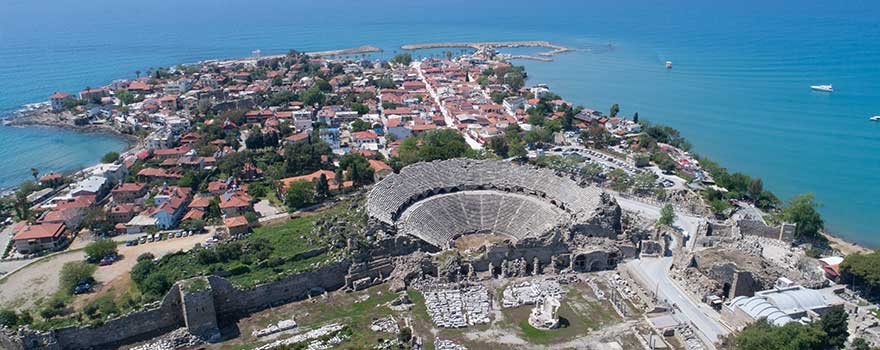
-
Day 10 Antalya – Konya
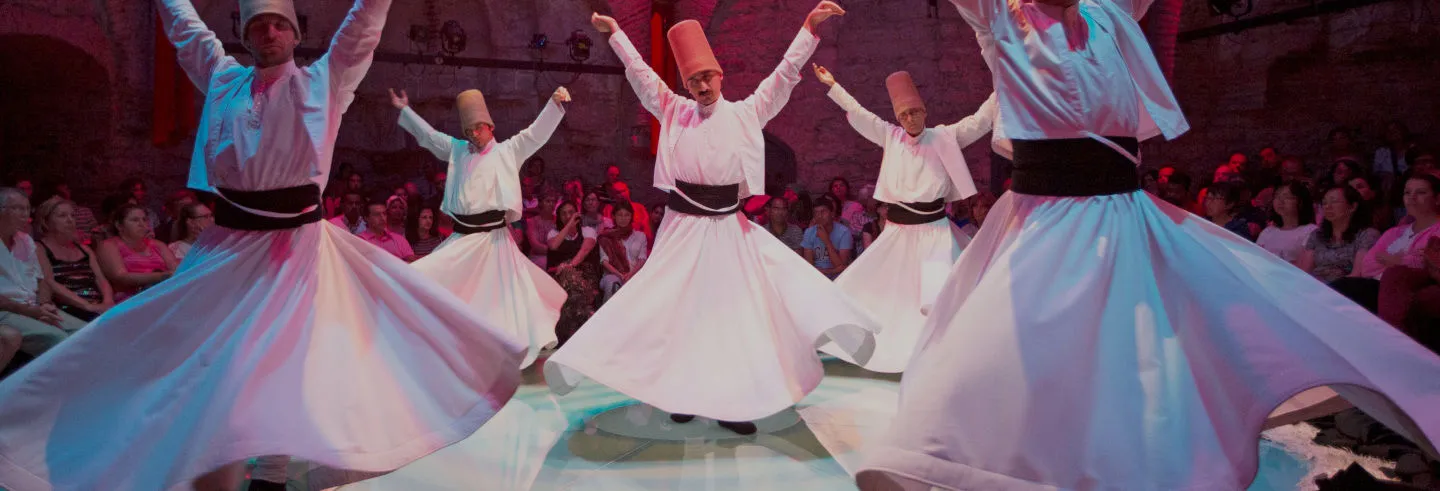
Breakfast. Drive to KONYA, the city of the dervishes. On arrival we will visit the Mevlâna Müzesi, i.e. the Mevlana Museum. The museum houses the tomb of Mevlana Jalaluddin Rumi, founder of the Mevlevi order of dervishes, often called the whirling dervishes. According to tradition, one day Mevlana went to the market, and while he was there he fell into a trance on hearing the sound of drums coming from different directions. Drawn by the rhythm of the sounds, but still in a trance, Mevlana began to spin in a circle with his arms raised upwards, the palm of one hand turned towards the sky and the other towards the ground. After this experience, Mevlana withdrew and decided to found a school in which he would teach young men about God and His creatures. Mevlana’s disciples were called dervishes, and they are especially known for their dance, the same dance that Mevlana first experienced in a trance at the market. This dance is recognisable by the dancers’ white robes and characteristic tall headdresses. Only experienced disciples who could reach a state of trance were able to perform this dance, and much practice was needed to reach that state. The dancer spins in a circle, always to the right, with the head tilted to the right and the arms raised in the air. The palm of the right hand is turned towards the sky and the palm of the left hand towards the ground.
Check-in at the hotel, dinner. Departure for the dervish dance. Overnight.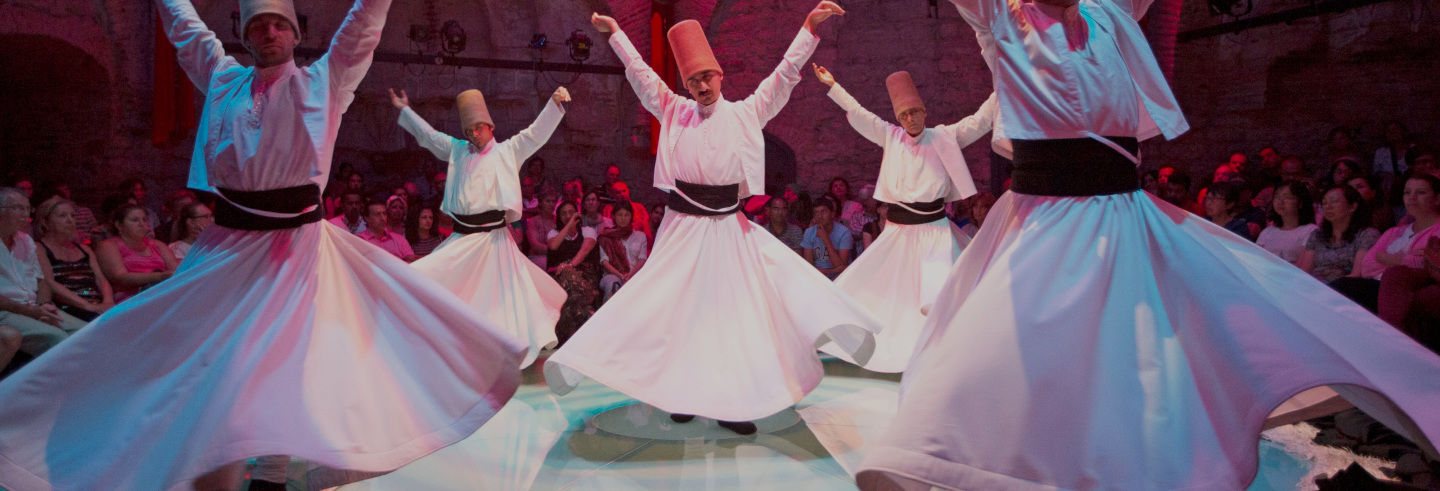
-
Day 11 Konya – Cappadocia (Göreme)
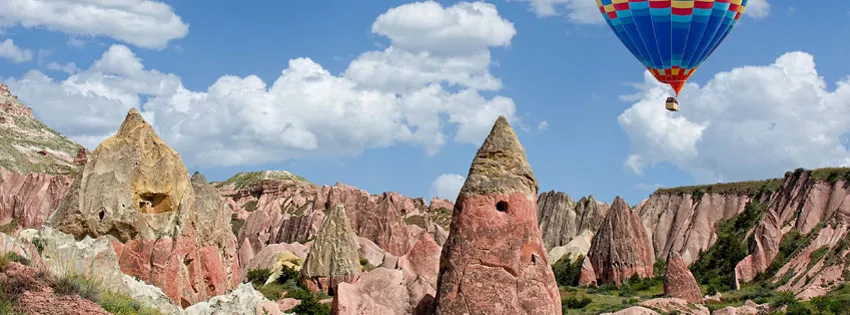
Breakfast. Drive to CAPPADOCIA, which in the Hittite language, as well as in Persian (Farsi), means land of beautiful horses. In ancient times, before they were domesticated, wild horses lived here. Departure for western Cappadocia, where powerful eruptions of the Erciyes volcano 3 million years ago formed one of the most spectacular landscapes in the world. Tour of GÖREME. The entire town is set in the rocks and dates from the time of early Christianity, when Christianity was forbidden and Christians were persecuted. The rocks hold beautiful Byzantine frescoes with scenes from the Old and New Testaments.
Departure for the city of KAYSERI, one of the most important industrial and commercial centres in Turkey. Check-in at the hotel, dinner, overnight.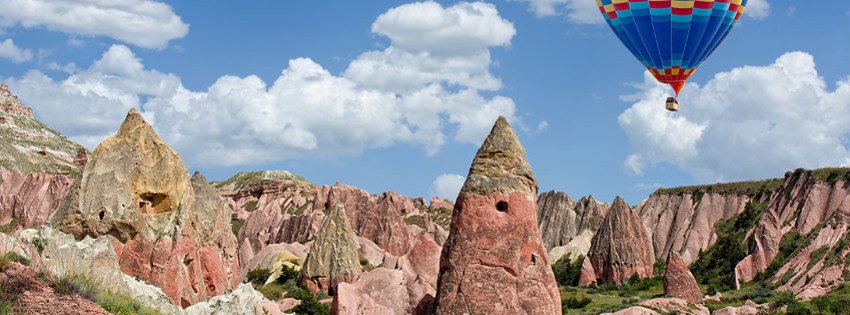
-
Day 12 Cappadocia – Zagreb
Breakfast. Short walk around the town. Transfer to the airport as scheduled.
Legacy of Alexander the Great in Turkey
Send an enquiry
Interested in this journey? Send us an enquiry and we will get back to you with a tailored offer and available dates.
You may also like
Legacy of Alexander the Great in Turkey12 days / 11 nights
Send an enquiry