
At a glance
Duration10 days / 9 nights
TransportFlight
GuideLocal guide
AccommodationHotels
Destinations
IstanbulPamukkaleAegean Coast
Western Turkey was the cradle of the early Christian church. This region was the centre of Paul's mission and an area to which he devoted a great deal of his time and energy. His ministry in the region was so fruitful that it could be said that "all who lived in Asia heard the word of the Lord" (Acts 19:10). It was also the sphere of ministry of the uncompromising prophet John, who wrote his Revelation to open the eyes of Christians living in seven cities of the province of Asia to the challenges of faithful living under Roman imperialism. When Ignatius, bishop of the church in Antioch on the Orontes, was on his way to execution in Rome, he was visited by delegations from the Christian communities of Ephesus, Tralles, Magnesia, Smyrna and Philadelphia. The letters he wrote to encourage these congregations open windows onto their ongoing life and challenges. Many of the churches founded at that time continued to flourish through the fierce persecutions of the Roman imperial period and saw the triumph of Christianity when Emperor Constantine embraced the faith and the world was changed forever. Join me on this journey as we visit these places and trace the history of the earliest church from Paul to the Council of Nicaea.
The Seven Churches of Revelation are the ancient churches about which Saint John wrote in the Bible. Each church received a letter calling on it to repent of its sins and correct its present course. When the letters were sent to the churches, there were active Christian communities in each of the cities. Today, while some remains of these ancient cities and their churches survive, others have merged into the modern Turkish towns that now dot the landscape. According to tradition, all 7 churches lay on a well-trodden trade route, and each church received a specific message to be delivered to its congregation. The first church was in Ephesus, the first stop along the trade route, followed by Smyrna, now Izmir, then the great city of Pergamon, then Thyatira, wealthy Sardis, Philadelphia and finally Laodicea, near present-day Denizli. The messages were delivered in order, allowing them to circulate among the Christian community of the time. The letters were intended to correct the ills of the churches in each city, and these places remain of great interest and a place of pilgrimage for Christian communities. Because the churches are close to one another, they are easy to see on a weekend trip, but why not take the time to explore the region more fully? The Aegean has a wealth of treasures waiting for you to discover!
Day by day
Itinerary
-
Day 1 Izmir-Kuşadası
Arrival in Izmir. Transfer to the hotel in Kuşadası. Dinner and overnight in Kuşadası.
-
Day 2 Ephesus-Kuşadası
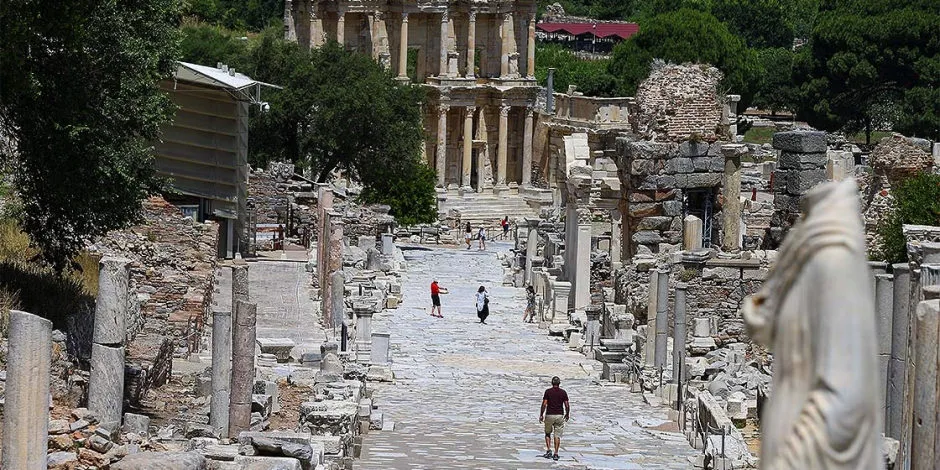
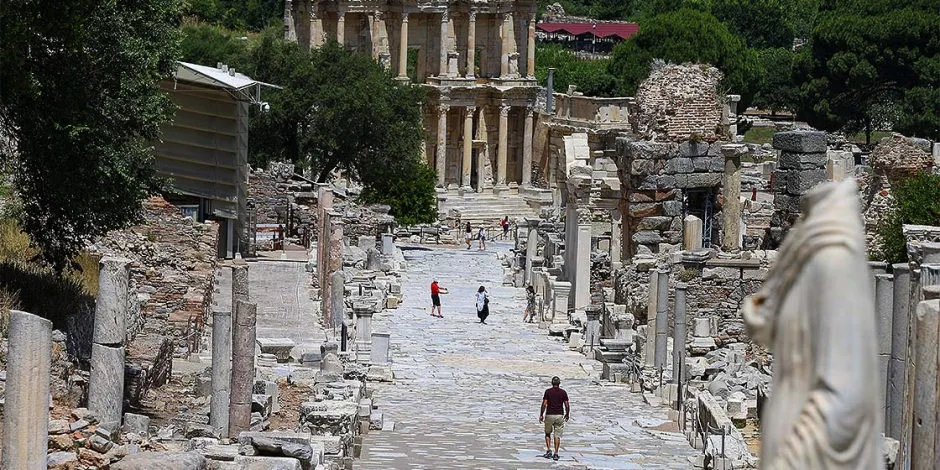
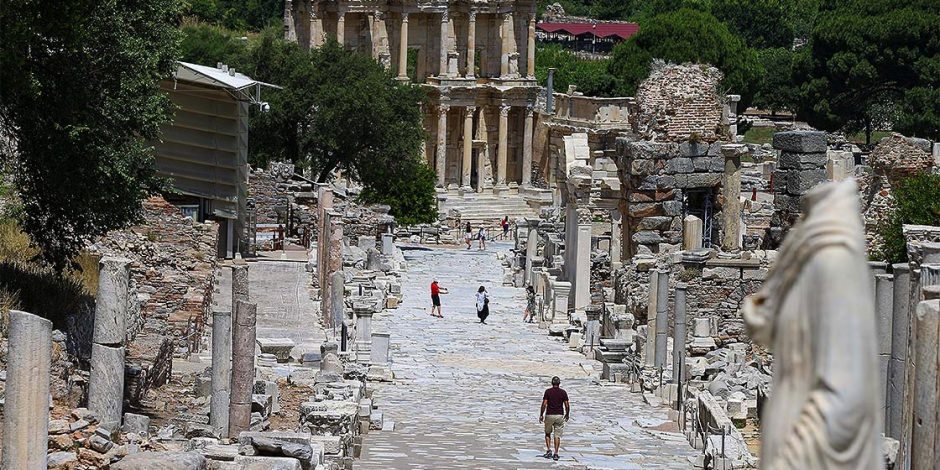
After breakfast we set off to visit Ephesus, the first of the seven churches. We will see the incredible ruins of this great city: the theatre, the library, the Temple of Hadrian and the newly excavated Roman terrace houses. You will also visit the Cave Church of Paul and Thecla, which is closed to the public. Dinner and overnight in Kuşadası.
Ephesus
The first church is in Ephesus, where St John lived
As Ephesus was an important Roman city, the church congregation here is believed to have been quite strong, and Christianity eventually became the city's main religion. Today visitors can enjoy exploring the site of the Roman city and key places of Christian history. The House of Mary and the Tomb of St John are key places of interest; Mary is believed to have lived out her days here before being buried in the Church of Mary. -
Day 3 Magnesia-Tralles-Nysa-Kuşadası
Visit Magnesia and Tralles, two early cities where Christianity flourished in the first century. Ignatius wrote letters to the churches in these cities on his way to martyrdom. Then visit the new Aydın Archaeological Museum. Continue the journey to the ancient city of Nysa with its beautiful library, theatre and odeon. Dinner and overnight in Kuşadası.
-
Day 4 Priene-Miletus-Aphrodisias-Pamukkale
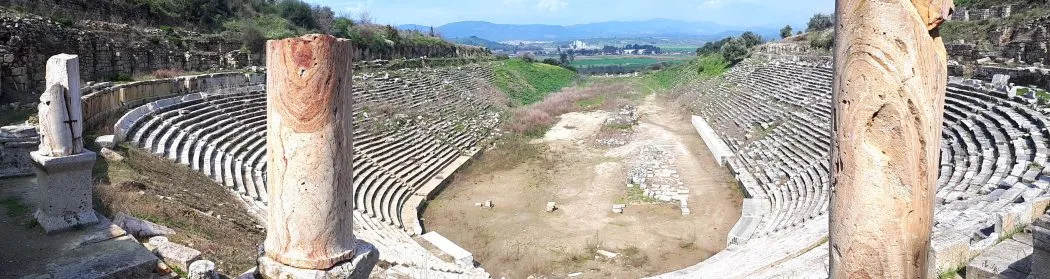
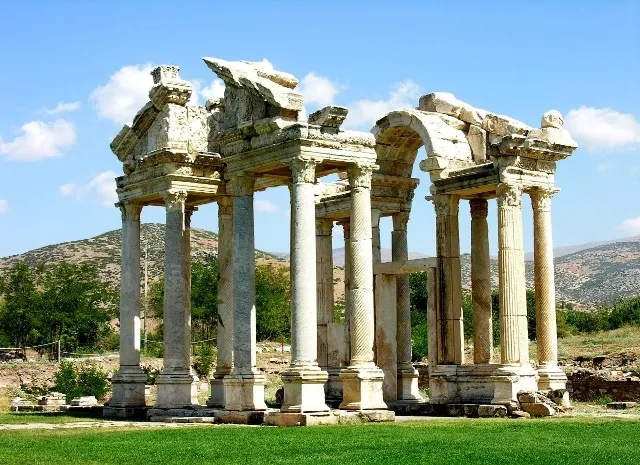
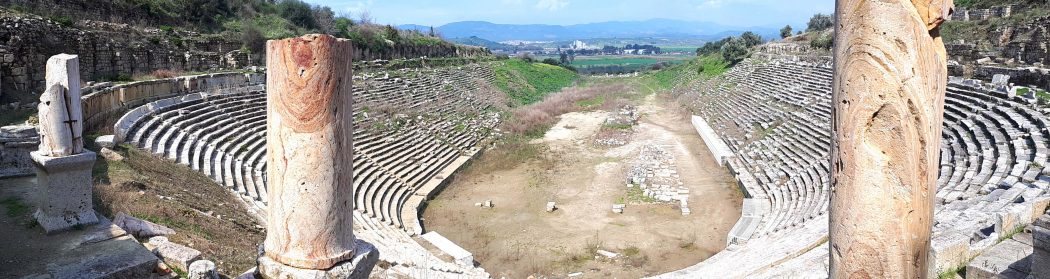
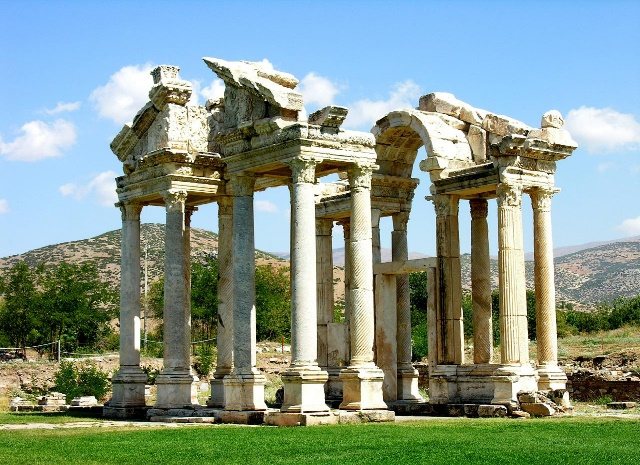
We drive south to visit the Greco-Roman site of Priene. Then we visit Miletus, the site of the theatre where Paul spoke with the Ephesian elders. Then we drive to Aphrodisias, excavated by New York University. We will see the Agora, the Theatre, the Stadium and the Baths of Hadrian. Then a visit to the Aphrodisias Museum. Dinner and overnight in Pamukkale.
-
Day 5 Colossae-Laodicea-Hierapolis-Pamukkale
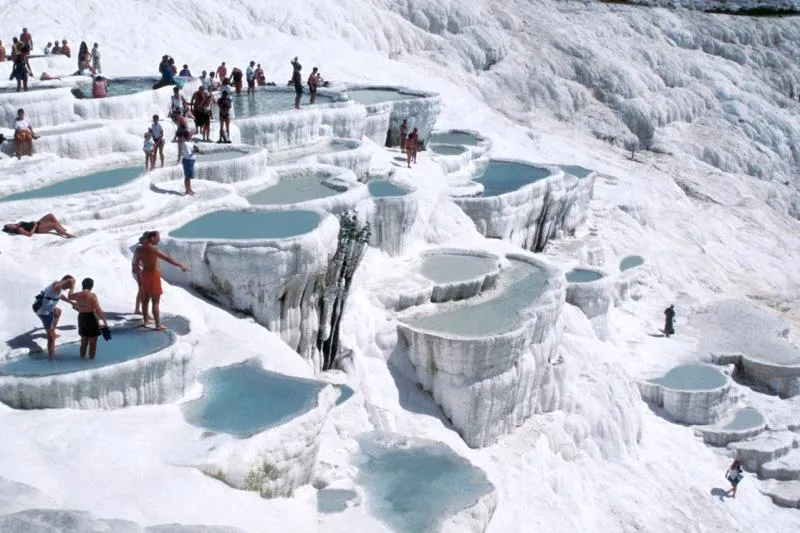
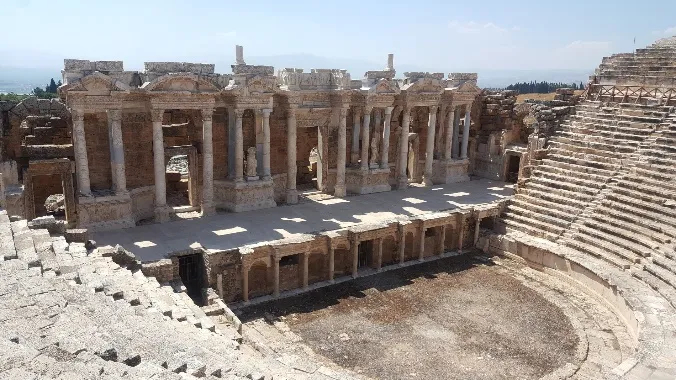
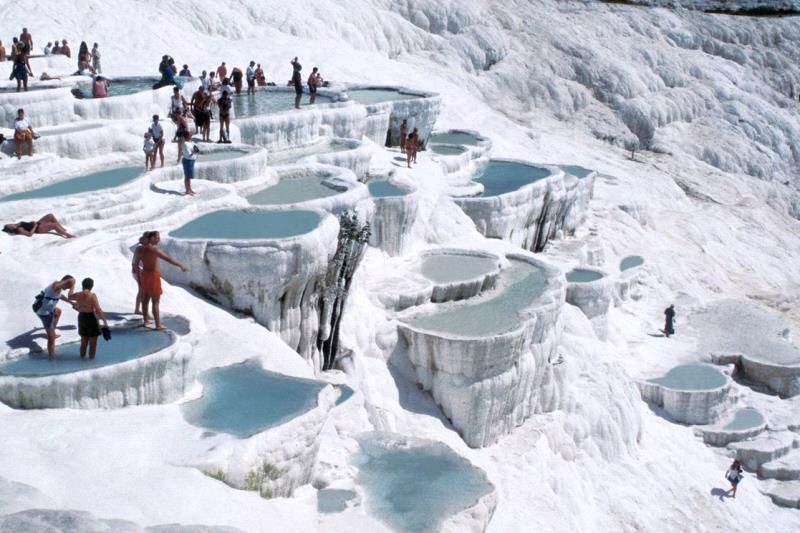
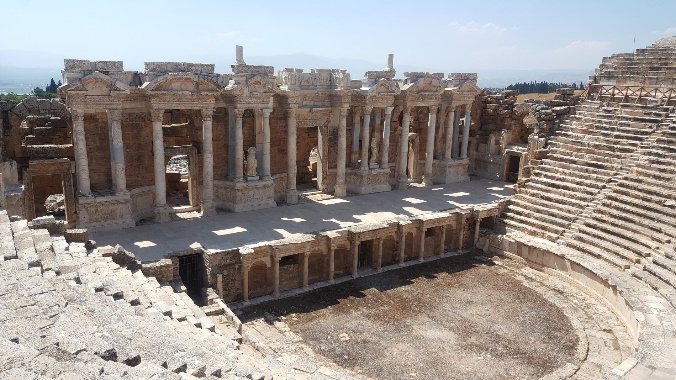
After breakfast we drive to unexcavated Colossae (Paul's Letter to the Colossians) at the foot of Mount Honaz. Then we continue to Laodicea, one of the Seven Churches of Revelation. Finally we visit Hierapolis, where we will see the monuments, the baths and the theatre with its well-preserved stage, as well as the Tomb of Philip. Dinner and overnight in Pamukkale.
Laodicea - Denizli
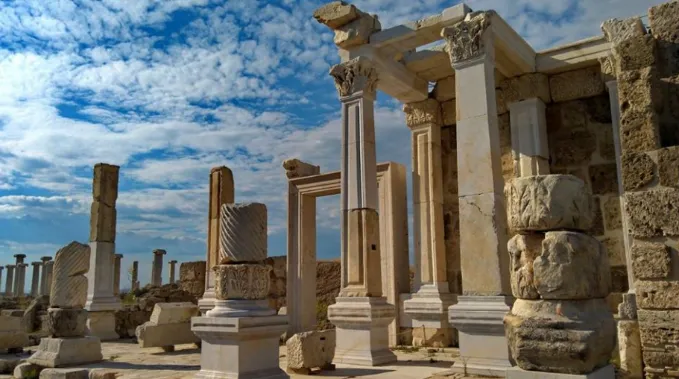
In ancient times Laodicea was a key city in the area. Important for trade and as a significant Christian site, Laodicea lies a few hours north of modern Denizli. The city was destroyed by earthquakes many times and was eventually abandoned. Careful excavation and restoration projects are now under way, revealing the history and importance of the site. The reconstructed basilicas contain intricate mosaics that are sure to delight visitors, and they are certainly worth taking the time to explore.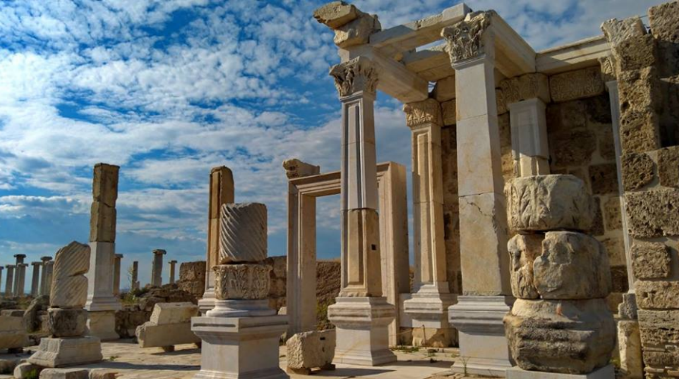
-
Day 6 Philadelphia-Sardis-Izmir
After breakfast we set off for Philadelphia, today called Alaşehir. We will see the remains of a Byzantine basilica as well as some eleventh-century frescoes. Philadelphia and Smyrna were the only two of the Seven Churches about which John said nothing bad. From there we travel to Sardis, one of the most picturesque sites of any of the Seven Churches. We will see the remains of the Temple of Artemis as well as a small Byzantine church. Afterwards, drive to Izmir (ancient Smyrna), one of the seven churches and one of the oldest continuously inhabited cities in the world. Dinner and overnight in Izmir.
Philadelphia - Alaşehir
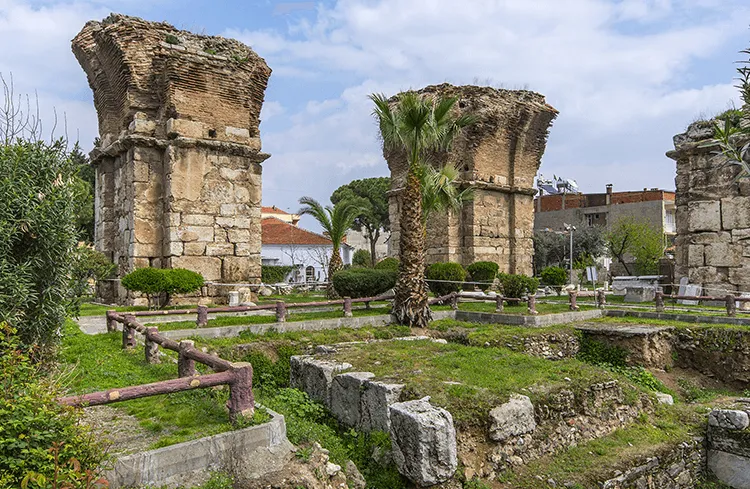
Philadelphia was a prosperous city under Roman rule. Modern Alaşehir (City of God) is a titular see of the Roman Catholic Church. Artefacts from Alaşehir's colourful past can be found throughout the town. The Church of St John and the Church of St Jean are the key remaining Christian sites in the town.
Sardis - Sart
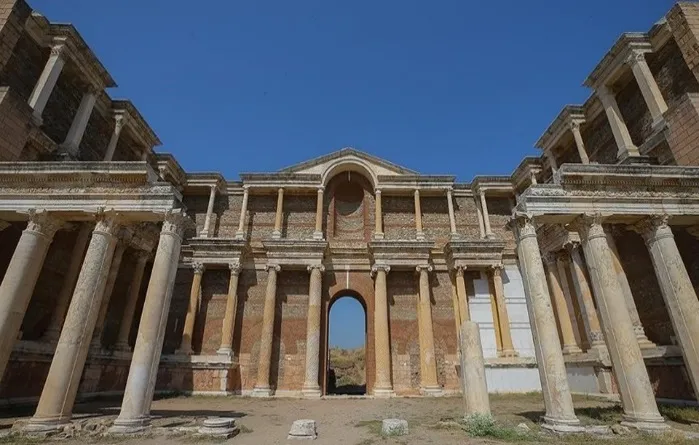
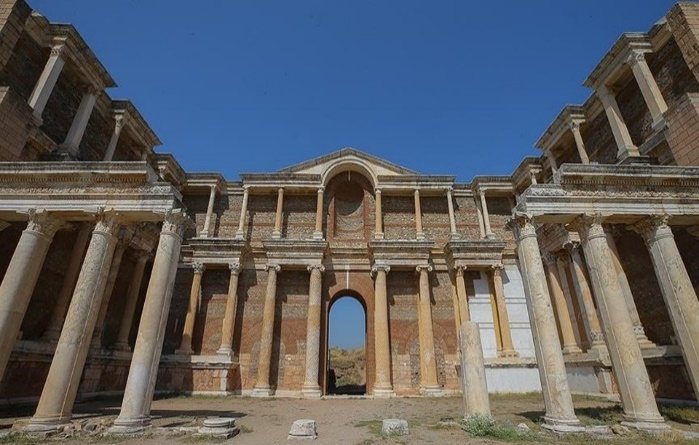
Sardis was one of the richest Roman cities in the area. Home to a significant Jewish population, Sardis was a bustling city important to the growth of the Church in the region. Once a thriving trading centre, Sardis today holds the remains of the Temple of Artemis, a Jewish synagogue, a Byzantine church and evidence of everyday Roman life. Sardis is a smaller site, but certainly worth the time to explore.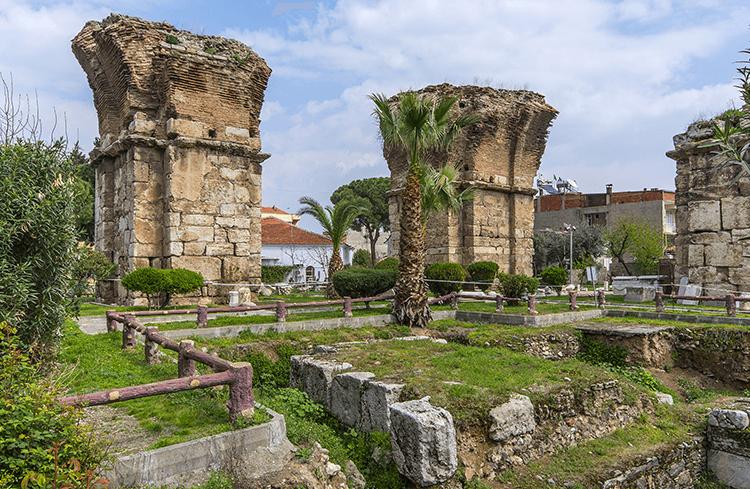
-
Day 7 Thyatira-Pergamon-Assos
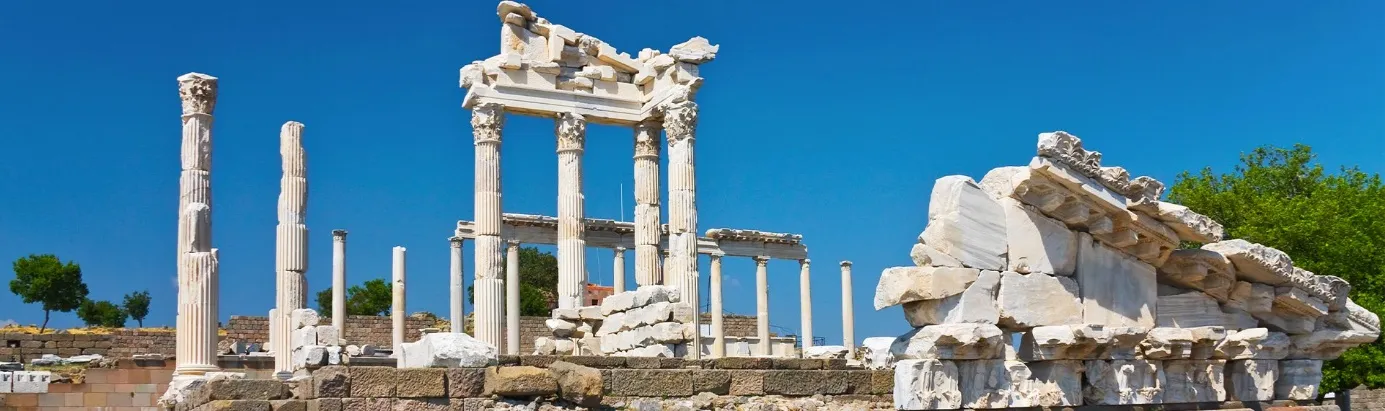
Drive to Akhisar to visit the remains of the church of Thyatira. Drive to Bergama, site of ancient Pergamon, one of the Seven Churches of Revelation. We will visit the Acropolis there and see the impressive theatre, the Temple of Athena and the ruins of the Asclepion, an ancient healing centre. We continue the drive to Assos. Dinner and overnight in Assos.
Smyrna - Izmir
In ancient times Smyrna was a very rich and powerful city; indeed, it rivalled Ephesus and Pergamon for influence in the region. Today Smyrna lies within modern Izmir, a city that has been almost continuously inhabited for centuries. The ancient city of Smyrna has largely been absorbed into the modern city and, as such, few intact remains of ancient life survive. The most important historic structure is the Agora, one of the best-preserved structures of ancient Ionia. Christianity in Smyrna is thought to have developed from the large Jewish population that once lived in the area, as people broke away from Judaism and were baptised into the Christian faith.
Thyatira - Akhisar
The fourth church, ancient Thyatira, now lies within Akhisar. Once a city known for its bronze work and weaving, this modern town is today one of Turkey's largest tobacco and olive oil growing regions. The ancient church featured in the Book of Revelation can be found in modern Akhisar's Ulu Cami (Grand Mosque). The building is a former Byzantine church that was converted after the Ottoman conquest of the region. The church of Thyatira was told to persevere in its beliefs despite the lack of a strong church in the city. Today there is little to suggest that Christianity once thrived in the region. Pergamon is one of the most interesting and most visited ancient sites in Turkey. Remains survive from as far back as the Archaic period, and the surviving buildings include the Theatre, the Temples of Athena and Dionysus, and the Gymnasium. Pergamon was a large city, significant both politically and commercially, and its citizens enjoyed full, busy lives. Christianity in Pergamon was at odds with the city's strong beliefs and its history of worshipping pagan gods. This conflict between Christian and pagan is what the letter to the church addressed, praising those who held firmly to their Christian faith and admonishing those who persisted in worshipping pagan gods.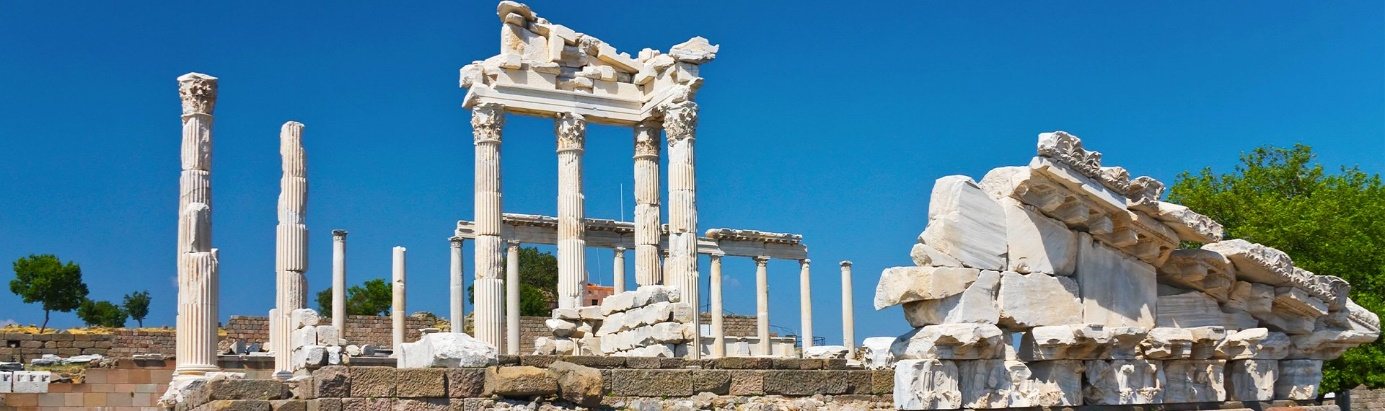
-
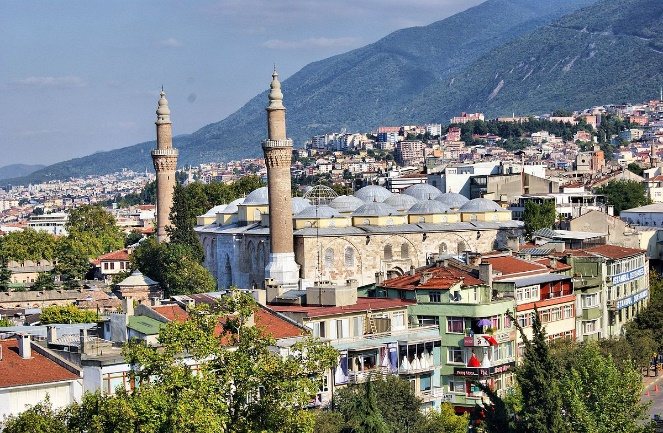
Day 8 Alexandria Troas-Troy-Bursa
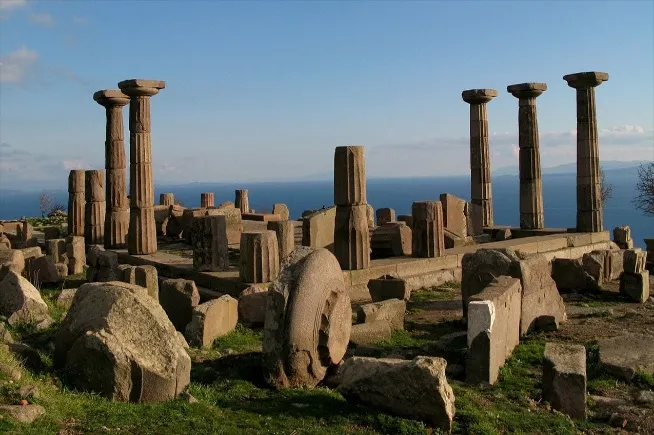
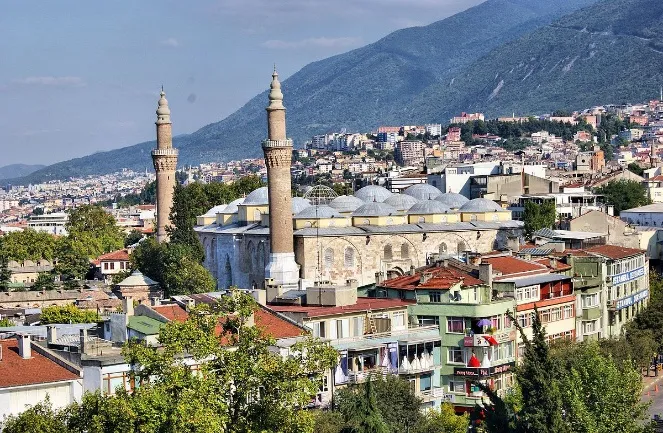
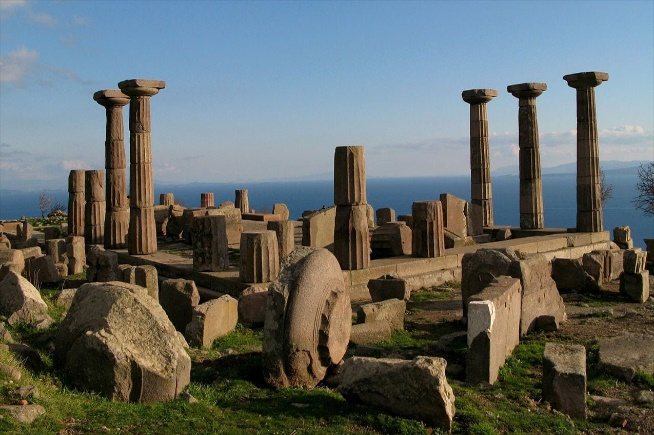
We visit the panoramic Temple of Athena in Assos and the Temple of Apollo Smintheus at Gülpınar. We continue to Odun Iskelesi to visit the site and harbour of Alexandria Troas, where Paul raised the boy Eutychus. Paul visited this area at least twice. Then we visit the legendary city of Troy and see the replica of the wooden horse. Dinner and overnight in Bursa.
-
Day 9 Nicaea-Istanbul
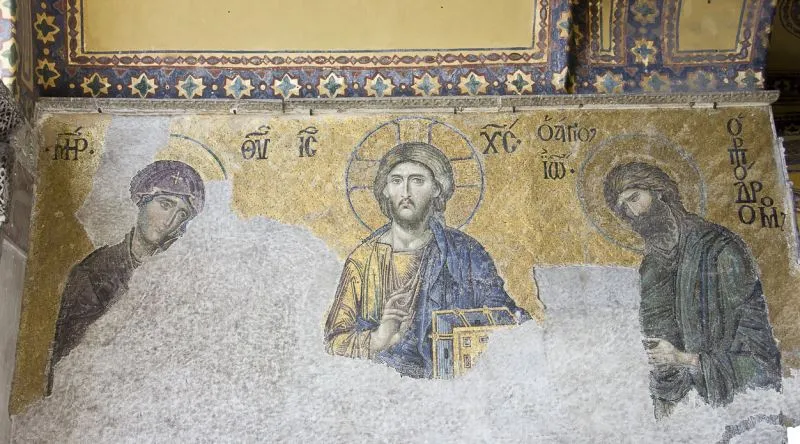
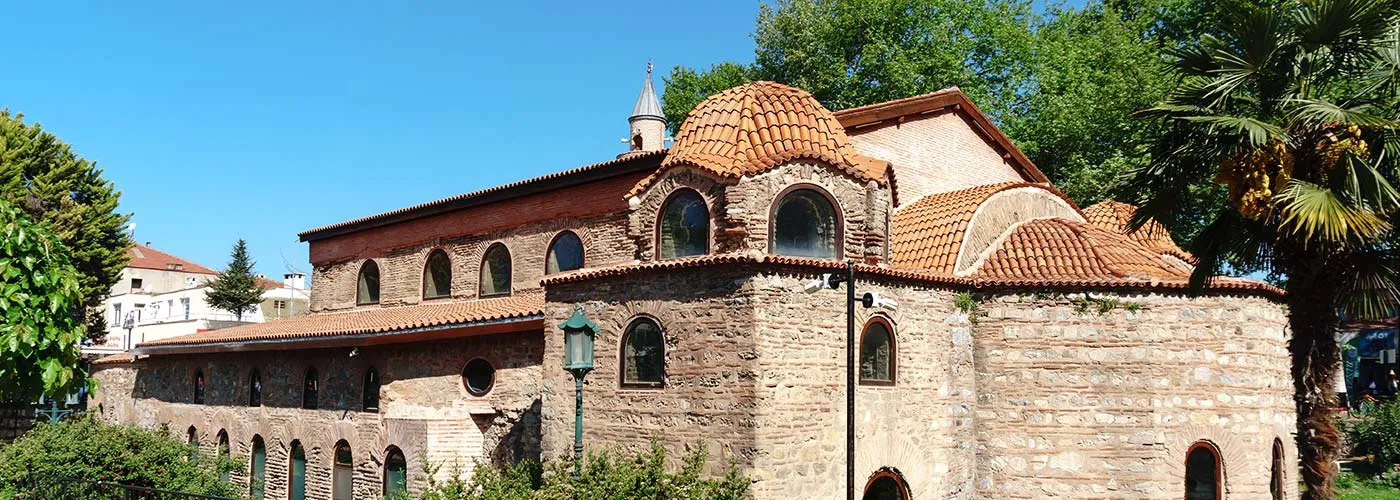
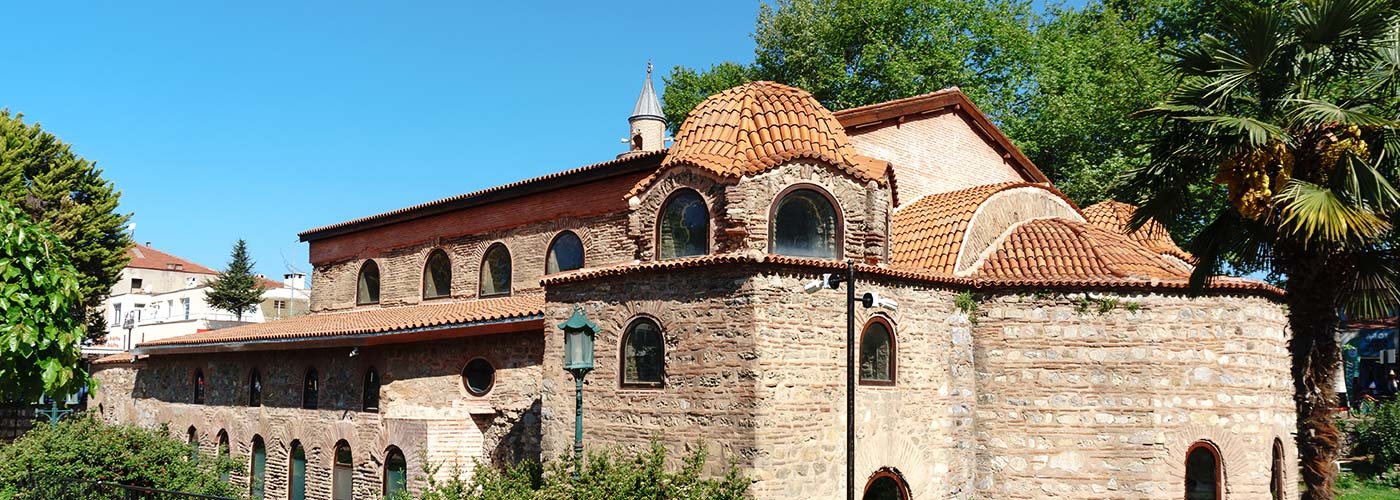
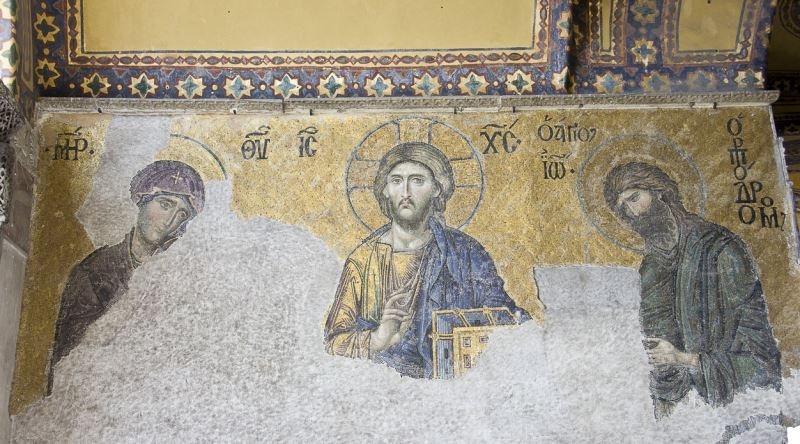
Drive to Iznik (ancient Nicaea). Two ecumenical councils were held here: the First Ecumenical Council in 325 and the Seventh Ecumenical Council in 787. Visit the ruins of the Church of Hagia Sophia, where the Seventh Ecumenical Council was held. Afterwards, drive to Istanbul, the only city in the world that spans two continents. On arrival, visit the Hippodrome square, Hagia Sophia, the Church of Hagia Irene and the underground cistern. Transfer to the hotel for dinner and overnight.
-
Day 10 Istanbul
Transfer to the airport. Departure from Istanbul.
Revelation Seven Churches & Nicaea
Send an enquiry
Interested in this journey? Send us an enquiry and we will get back to you with a tailored offer and available dates.
You may also like
Revelation Seven Churches & Nicaea10 days / 9 nights
Send an enquiry